2025 Impact Report
Your Money Already Chose a Side
Most people think about their carbon footprint in terms of what they eat, what they drive, or whether they fly. But your biggest climate decision may not be what you drive. It's often where your money sits.
Most dollars deposited in a conventional bank get lent out. Major banks have directed trillions toward oil pipelines, coal plants, and fossil fuel infrastructure — using customer deposits as the funding source, without asking.
Your money already chose a side. Most people just haven't realized it yet. This is what GreenFi customers built in 2025.
2025 Community Impact
In 2025, GreenFi customers didn't change their lives. They changed where their money went — and this is what happened.
Haiti 536,769 · Senegal 157,999
Carbon avoided means emissions that never happened. Carbon offset means emissions counterbalanced through verified carbon avoidance or removal projects.
One App, Global Impact
Your Banking Reached Six Countries
In 2025, GreenFi customers planted trees on mangrove coastlines in East Africa, powered renewable energy in South Asia, and cleaned up beaches across the USA — measurable impact across six countries, just by changing where they bank.
Kenya & Tanzania
Mangrove restoration across coastal ecosystems near Mombasa. Nine species replanted across degraded coastline.
Senegal
Agroforestry in the Gambia River Watershed. 6,000 farming families restoring land degraded by decades of monocropping.
Haiti
Agroforestry for food security in the West and Nippes regions. Native and fruit-bearing species reintroduced alongside food crops.
Gujarat, India
Wind turbines generating clean electricity for India's grid, replacing fossil fuel-derived power in a rapidly industrializing region.
Maine, USA — Big Six Forest
22,067 acres of industrial forest protected from aggressive harvesting. Sustainable maple syrup production over short-term timber sales.
Maine, USA — 100-Mile Wilderness
Improved forest management protecting a critical carbon sink in one of the most ecologically intact landscapes in the eastern United States.
United By Blue Cleanups
GreenFi-sponsored beach and waterway cleanup events in Miami (Biscayne Bay), Brooklyn (Gerritsen Beach), Boulder (Boulder Creek), Denver (South Platte River), and Fort Collins (Poudre River).
Waves of Change — Pennypack Park
GreenFi is partnering with Waves of Change Foundation and United By Blue to remediate a historic illegal dumping site in Pennypack Park, protecting a watershed that feeds into the Delaware River and Philadelphia's drinking water supply.
Fossil Fuel Free Banking
Your Deposits Don't Fund Fossil Fuels. Ever.
Conventional banks take your deposits and lend them. Major banks have collectively directed trillions of dollars toward fossil fuel companies — oil, gas, and coal — using customer deposits as the underlying funding source.
GreenFi's partner banks have never operated that way. Your deposits don't fund pipelines. They never have.
Plant Your Change
Your Spare Change Rebuilt Forests Across Four Countries
Members who opt into Plant Your Change round up their debit card purchases to the nearest dollar. That spare change funds tree planting in some of the world's most ecologically and economically vulnerable communities. No extra steps. No behavior change required.
GreenFi partners with veritree who provides a technology-driven platform that provides end-to-end transparency to verify tree planting operations and impact. Local communities use mobile monitoring tools for data collection, site planning, and impact tracking. Every planting session undergoes three levels of verification, ensuring that data collection, assets, tree progress, biodiversity outcomes, and workforce efforts align with expectations.
View live data →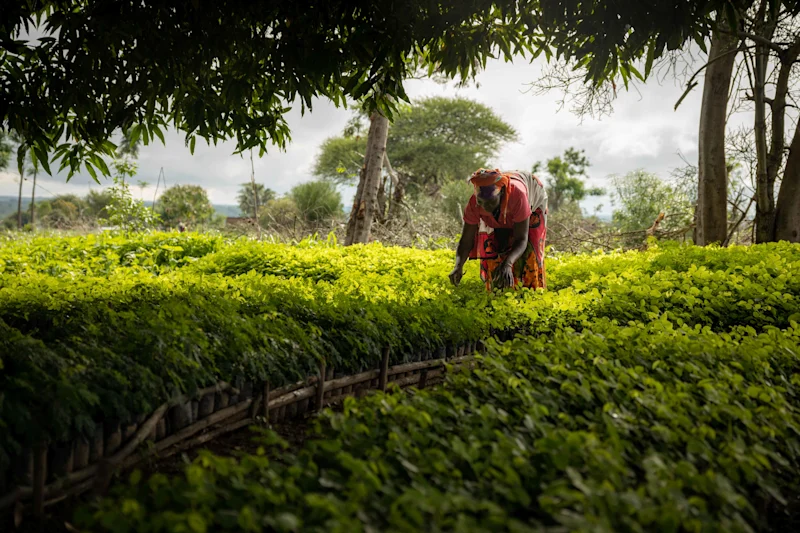
Kenya & Tanzania — Eastern Africa Mangrove Restoration
East Africa has lost up to 40% of its mangroves over recent decades. GreenFi's reforestation work spans both Kenya and Tanzania, replanting nine species of mangrove across coastal ecosystems near Mombasa. Mangroves sequester an estimated 0.31 tonnes of CO2 per tree and protect 70% of the world's tropical coastlines from erosion and storm surge.
58% of all staff members are women, and 80% of tree nursery participants are women. Each 10,000 trees planted generates 20 workdays in communities where employment is scarce.
"I've learned valuable skills, contributed to environmental restoration, and improved my family's well-being."
— EarthLungs Tree Planter
Haiti — Agroforestry for Food Security and Resilience
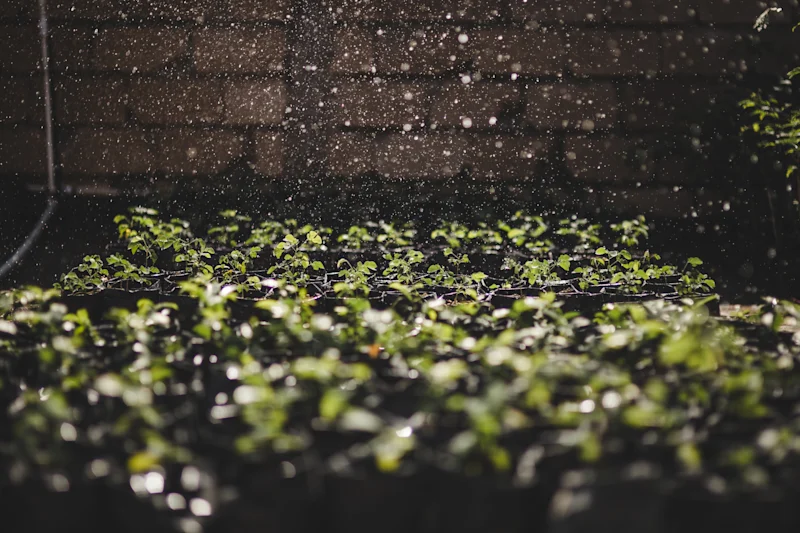
In the West and Nippes regions of Haiti, GreenFi partners with veritree and local women-led cooperatives including Fanm Limye to restore degraded landscapes through agroforestry. Native and fruit-bearing species — mango, cashew, cacao — are reintroduced alongside food crops, rebuilding soil health and food security simultaneously.
Agroforestry systems retain up to 53% more nitrogen in the soil, improving crop yields. In Haiti, 84% of women are on group leadership committees.
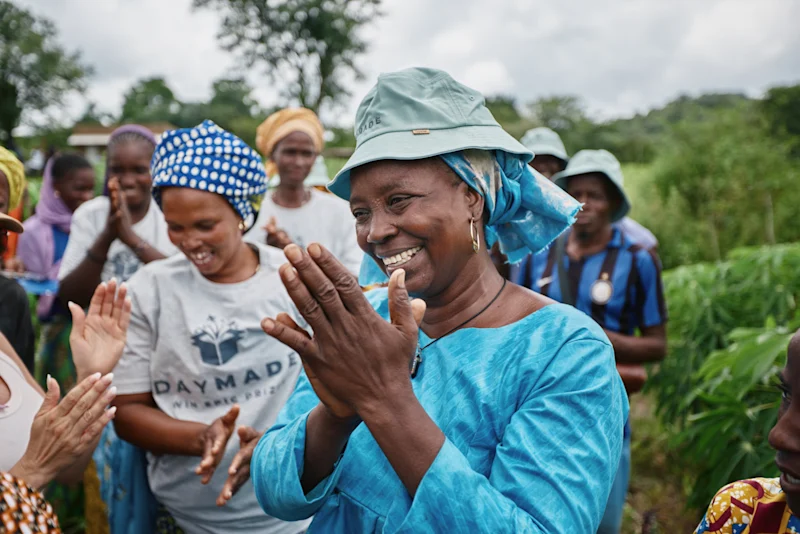
Senegal — Agroforestry in the Gambia River Watershed (New in 2025)
Decades of peanut monocropping have degraded soils and left communities across the Nganda Region vulnerable to food insecurity. GreenFi's program — in the Ndankou and Patte Forest areas — equips 6,000 farming families to restore land through agroforestry combining modern monitoring with ancestral knowledge. Species include tamarind, bananas, silk cotton, mammoth baobab, and mahogany.
Agroforestry reduces soil erosion by up to 90% in Sub-Saharan Africa. 50% of women hold regional leadership roles.
"Tree planting has given me the possibility to provide for my family, planning my garden to plant mangos, cashews and guavas will provide us with sustenance for the dry season."
— Samba Ngar, Lead Farmer with Mother Trees
Green Marketplace
Your Spending Moved Millions of Dollars Toward the Climate Economy
Every purchase is a signal. Even environmentally conscious consumers send most of their spending to conventional brands with no climate accountability. The Green Marketplace changes that equation — not by asking customers to shop differently, but by making climate-friendly brands the easier, more rewarding choice.
In 2025, GreenFi customers redirected millions of dollars in spending toward brands selected through GreenFi's documented review framework — assessing recycled or regenerative materials, emissions transparency, third-party certifications including B Corp, The Climate Label, and 1% for the Planet, and whether the product itself is a climate solution such as EV charging infrastructure.
The Green Marketplace grew significantly over the year. GreenFi ended 2024 with 120 brands and 65,000 EV chargers. By early 2026, that footprint had expanded to 248 brands (+107%) and over 78,000 EV charging locations — doubling the range of climate-friendly choices available to customers without requiring any behavior change.










Millions of dollars redirected is a demand signal. It represents consumer purchasing power that would have otherwise flowed to conventional brands, now directed toward companies building a better economy. At scale, this is how markets change.
Planet Protection
Your Driving Got a Little Less Costly to the Climate
GreenFi doesn't ask customers to give up their cars. Planet Protection estimates driving emissions from gas purchases on the debit card and offsets them automatically through verified carbon credit projects. No manual steps. Just convenient climate action.
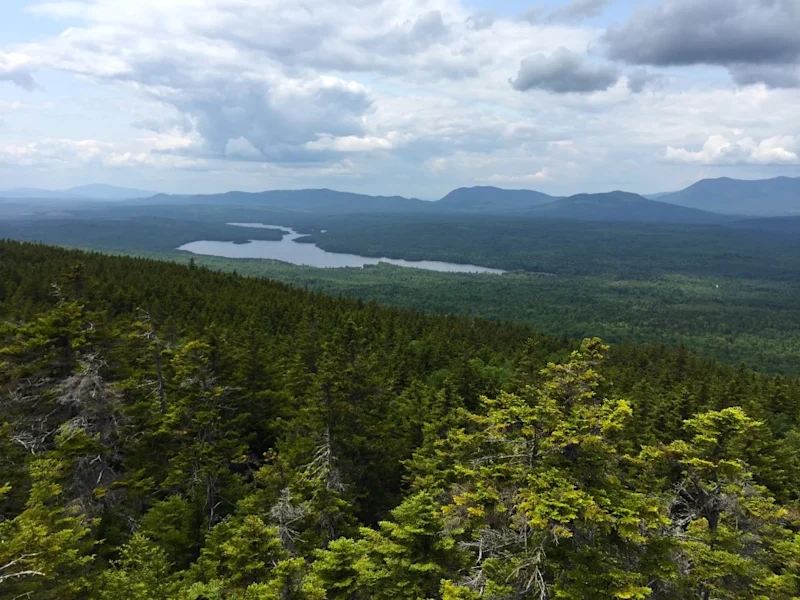
Big Six Improved Forest Management — Maine, USA
Registry: Bluesource / ACR 588 →22,067 acres of industrial forest in northern Maine protected from aggressive harvesting. Carbon market revenue enables the landowner to prioritize sustainable maple syrup production and long-term forest conservation over short-term timber sales.
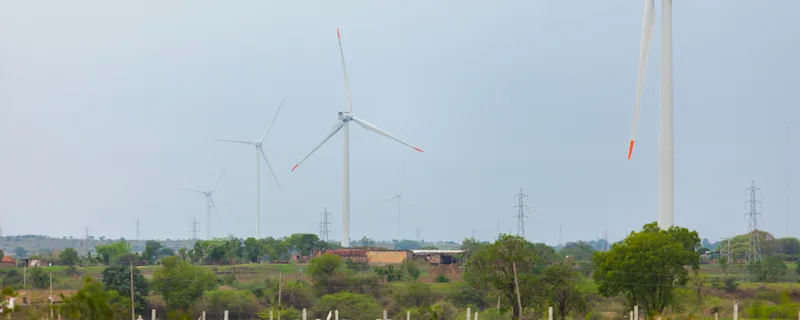
Renewable Wind Power — Gujarat, India
Registry: Adani / Verra VCS 2042 →Wind turbines generating clean electricity for India's grid, replacing fossil fuel-derived power in a rapidly industrializing region. Co-benefits include clean energy access to surrounding rural villages, job creation, and reduced air pollution.
Redwood Fund
Your Investment Portfolio Has a Smaller Footprint Than the Market
Most portfolios still fund fossil fuels. This one doesn't. The GreenFi Redwood Fund screens out fossil fuels and high-carbon assets entirely, with ESG oversight from sub-advisor UBS Asset Management — focusing on companies with lower emissions profiles without sacrificing investment discipline.
In 2025, the fund removed some of the highest carbon intensity holdings. The result: Redwood's carbon footprint (scope 1 and 2) per dollar invested is now approximately 56% lower than the S&P 500 — up from 38% lower in 2024.
GreenFi offsets the scope 1 and 2 emissions associated with Redwood investments through publicly registered carbon credit retirements on Verra and ACR, making Redwood carbon neutral on those dimensions.
For information on financial performance, holdings, account types, and fees — or to sign up — visit funds.greenfi.com/redwood.
Carbon Footprint (Scope 1 & 2) Per Dollar Invested
S&P 500 shown as normalized baseline (100). Redwood values reflect relative carbon footprint (scope 1 and 2) reduction.
It's Not Just Our Products
How GreenFi Holds Itself Accountable
GreenFi's impact doesn't stop at what flows through customer features. The company itself operates under independent accountability standards — not self-assessed, externally certified.

The Climate Label Certified
Every year, GreenFi measures its full emissions footprint across scope 1, 2, and 3 — including financed emissions and supply chain. That measurement is reviewed and certified annually by The Change Climate Project. GreenFi's 2024 total footprint was 3,357 tCO2e, or 0.22 kg CO2e per dollar of revenue. Certifying with The Climate Label means that we pay for our carbon emissions by funding climate solutions within our supply chain and around the world, with all carbon credit retirements publicly registered on Verra and ACR.
GreenFi's direct operational emissions — offices, travel, commuting — are a small share of the total footprint. The larger drivers are financed emissions within the Redwood Fund, supply chain partners including Coastal Community Bank, Mastercard, and Galileo Financial Technologies, and the physical debit card. On the Redwood Fund, GreenFi commissioned a mutual fund emissions calculator to identify portfolio companies with outsized carbon footprints and remove them, and paid for a Net Zero alignment assessment of the full portfolio. On supply chain partners, GreenFi is actively working with Coastal, Mastercard, and Galileo Financial Technologies on reduction opportunities. On the debit card, GreenFi chose recycled plastic at a cost premium over conventional alternatives — because the products we put in customers' hands are part of our footprint too.
Active Reduction Commitments
Renewable Electricity
Transitioning 100% of electricity consumption to renewable energy sources across all current and future offices (scope 2, target Q1 2026).
Recycled Debit Cards
GreenFi switched to debit cards made from recycled materials, reducing the embodied emissions of every card issued to customers.
Remote Work & Commuting
Implementing a remote work policy targeting a 90% reduction in commuting emissions across all office locations, and a broader Remote Work Carbon Reduction Program to further reduce scope 3 employee travel emissions.
Low-Carbon Business Travel
Implementing a policy requiring lower-carbon forms of travel and encouraging remote alternatives wherever possible (scope 3).
Sustainable Merchandise & Gifting
Establishing a formal policy to ensure all company-branded materials and gifts meet sustainability standards (scope 3, target 2025).
2024 Carbon Offset Portfolio
GreenFi retired verified carbon credits across the following publicly registered projects to neutralize scope 1, 2, and 3 corporate emissions.
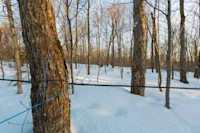
Big Six Improved Forest Management — Maine, USA
American Carbon Registry · ACR588 · Vintage 2021 · Forestry / Improved Forest Management
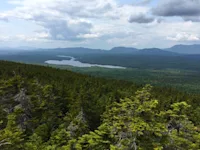
Maine 100-Mile Wilderness Improved Forest Management — Maine, USA
American Carbon Registry · ACR566 · Vintage 2021 · Forestry / Improved Forest Management
Renewable Wind Power — Gujarat, India
Verified Carbon Standard · VCS2042 · Vintage 2021 · Renewable Energy / Wind
1% for the Planet
GreenFi believes that businesses operating on this planet have a responsibility to give something back to it. That commitment takes a concrete form: 1% of total annual revenue goes directly to environmental nonprofits, every year, without exception. In 2025, those contributions supported five partner organizations working across waterway cleanup, ocean restoration, and regenerative agriculture.
2025 Partners
United By Blue — Beach & Waterway Cleanups
GreenFi sponsored five cleanup events across the United States in 2025, in partnership with United By Blue:
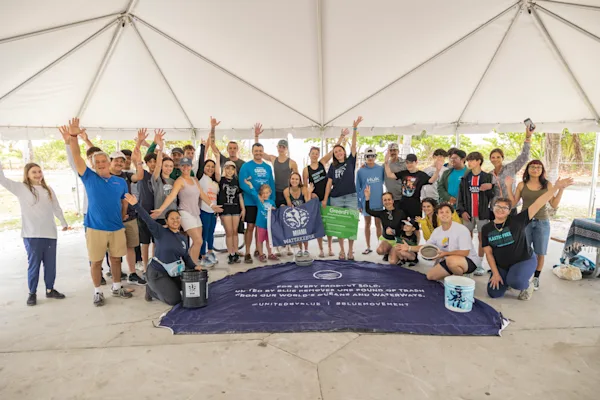
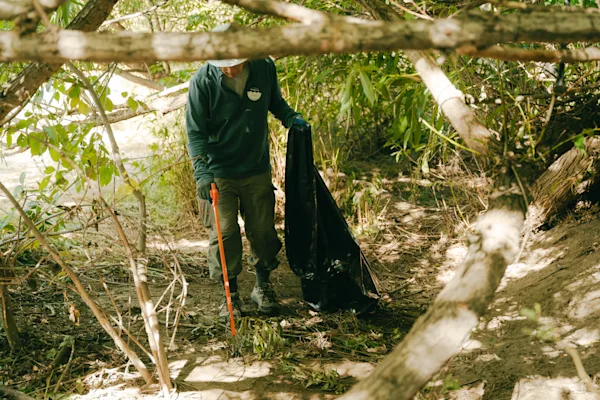
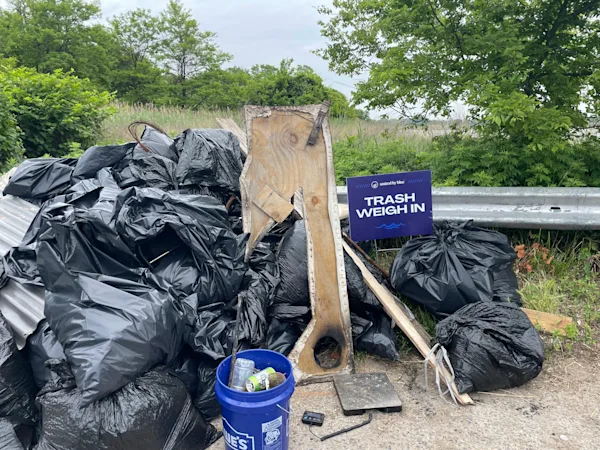
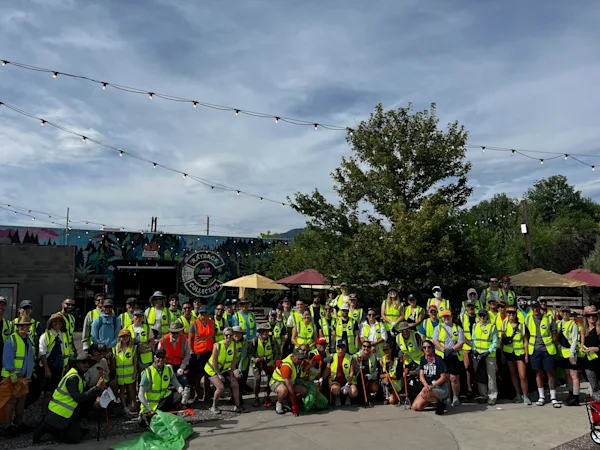
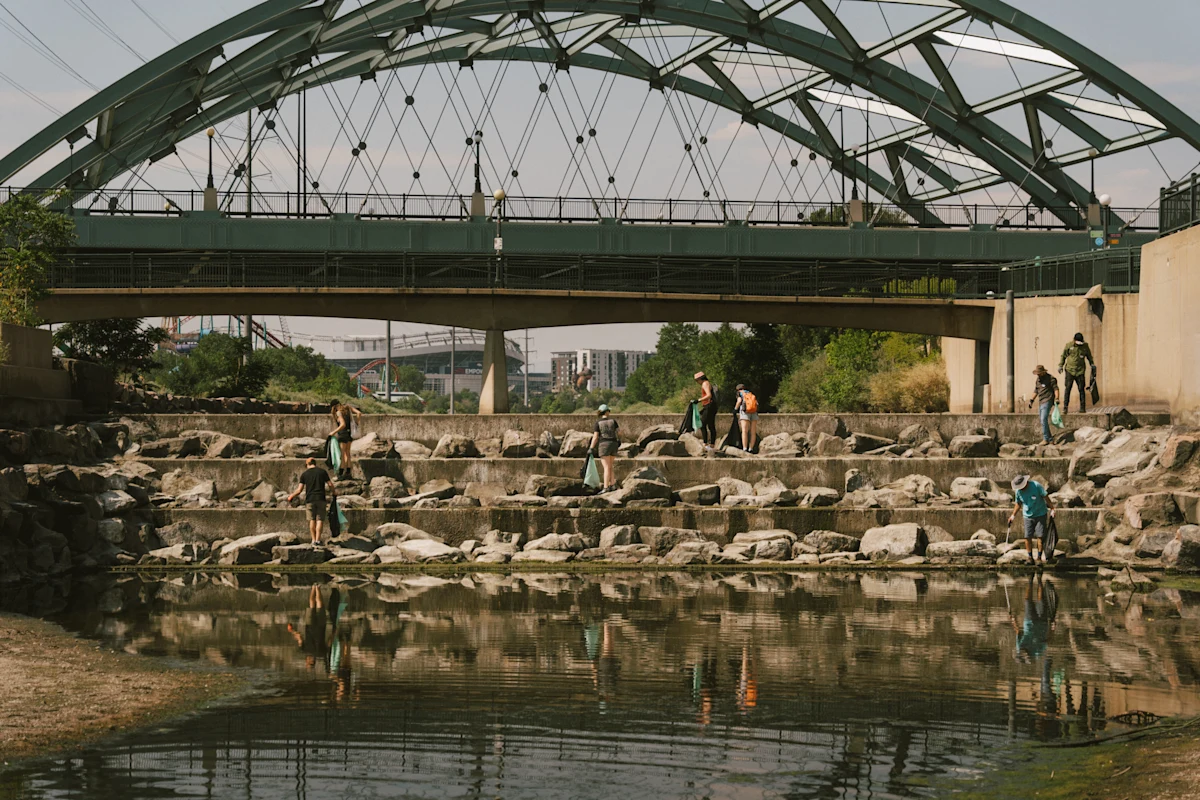
Across all five events: 2,956 lbs of trash removed from waterways and coastlines, with 313 volunteers participating.
United By Blue →United By Blue — Waves of Change Foundation
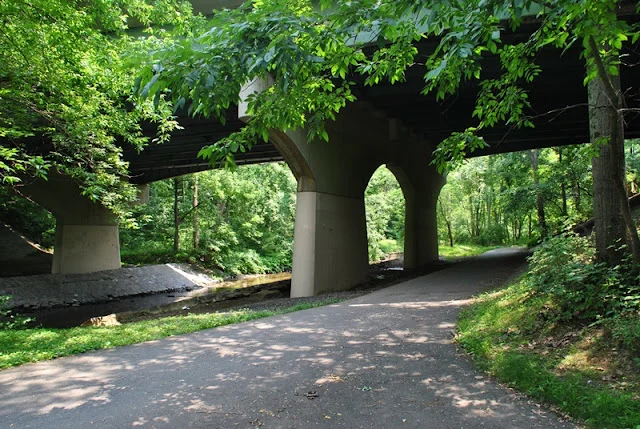
GreenFi's 2025 contributions to Waves of Change Foundation, a 501(c)(3) started by the team behind United By Blue, in partnership with the City of Philadelphia, are funding a major restoration in Philadelphia. The project targets a historic illegal dumping site in Pennypack Park — a watershed that drains into Pennypack Creek and ultimately the Delaware River, a critical source of drinking water.
The remediation will remove construction debris, furniture, appliances, and other illegally dumped materials, with fencing and signage installed to prevent future dumping.
Kiss the Ground
GreenFi established a new partnership with Kiss the Ground in early 2026, which partially counts toward our 2025 1% for the Planet commitment. Kiss the Ground is an audience-supported nonprofit promoting Regeneration and healthy soil as a viable solution for human and planetary health. Since 2013, they've inspired millions to participate in the Regenerative Movement through storytelling, education, and partnerships. For every $100 donated, Kiss the Ground inspires and catalyzes the transition of 10 acres into regenerative agriculture, working directly with farmers and partners.
Kiss the Ground →Your money already chose a side.
None of it required a lifestyle change. It required a banking app.
Your money is already doing something. Choose what. Get Started